It is not easy
to get to Ciudad Perdida. It is well said that the best places are not around
the corner. They almost do not find it. The Colombian government discovered it
very recently, in 1976, almost 14 centuries after the Taironas built it in the
confines of the Sierra Nevada de Santa Marta.
Little by little, the travelers discover the treasures that he gives with generosity: the pure life
that pulsates in the Sierra Nevada de Santa Marta, sanctuary of the unique nature in the
world that is born in the Caribbean Sea and crowns in the snow, 5,775 meters high; crystal
clear rivers with fresh and powerful waters, splendidly plumed birds - more than 500 species
have been documented - and leafy forests, like fairy tales.
The waterfalls that drain from the mountains and blow fresh breeze; the lizards and maybe a
jaguar. That humble wisdom of our older brothers, the natives of the four ethnic groups of the
Sierra. A trip that becomes a personal challenge and a dream come true. A stone city that
springs up like a miracle in the middle of the jungle.
It is all that and also a reflection of the history and horrors of the Colombian armed conflict.
A place where its residents decided to forgive and turn the page of a painful past to start a
new life with a collective hope: tourism. A place where peace has already happened.
 But it will not be easy to get to Ciudad Perdida. You will sweat in jets, like a block of melting ice. You will be bitten by mosquitoes so you bathe in repellent and you will get hives on your skin. You will walk between four and six days in the wild forest and a boiling humidity of 85 percent will turn your body into a furnace. You will breathe with difficulty. You will feel that your legs tremble while you spider up steep slopes up to one kilometer.
Well, you will spend all those hardships unless you are an expert walker and enjoy a very good physical condition. The weakest, like me, leave the skin on the road.
But you will not suffer. The Sierra demands you, but it rewards you. It challenges you and renews you.
But it will not be easy to get to Ciudad Perdida. You will sweat in jets, like a block of melting ice. You will be bitten by mosquitoes so you bathe in repellent and you will get hives on your skin. You will walk between four and six days in the wild forest and a boiling humidity of 85 percent will turn your body into a furnace. You will breathe with difficulty. You will feel that your legs tremble while you spider up steep slopes up to one kilometer.
Well, you will spend all those hardships unless you are an expert walker and enjoy a very good physical condition. The weakest, like me, leave the skin on the road.
But you will not suffer. The Sierra demands you, but it rewards you. It challenges you and renews you.
 Unique natural area Los Estoraques
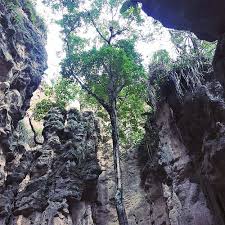
The Unique Natural Area Los Estoraques is one of the small protected areas of Colombia, covering only 6 km² of surface. Considered unique in its type for its beautiful brittle and eroded landscapes, the area is located at a height between 1450 and 2100 meters above sea level, in the middle of the Eastern Cordillera of the Andean region.
WeatherThe climate of the park is warm temperate, predominantly dry. This, added to the scarcity of rain most of the year and at an average temperature of 22 °, makes the vegetation a semi-desert type. However, to be within theEastern Cordillera are also the roots that cross the humidity to the site and favor agriculture.
Vegetation and floraDue to the dryness of the land, the climate and the low rainfall, in Los Estoraques we present a vegetation that corresponds to dry premontane forest mixed with shrubs and herbs.The most outstanding floristic and vegetable elements are the following:• Arrayán (Psidium caudatum).• Chaparro (Curatella americana).• Enceniño (Weinmannia).• Guayabo (Psidium).• Loqueto (Escallonia).• Mantequillo (Rapanea guianensis).• Mapurito (Roupala).• Miconia (Miconia rubiginosa).• Peralejo (Byrsonima crassifolia).• Raque (Clusia).HydrographyThe annual rainfall is about 870 mm, with a dry season from January to March. The evapotranspiration (which consists of the evaporation of water from the soil to the transpiration of the plants) is twice as much as precipitation, which causes a deficit of water for the plants and the reason that most of the streams have no flow in the dry times.The main basin is that of the Catatumbo River, and Los Estoraques is watered by the La Media, La Vaca, Blanco Volcano, Pantanillo, Caldo Huevo and Del Medio streams. Of all of them, the Pantanillo and Del Medio streams have their